
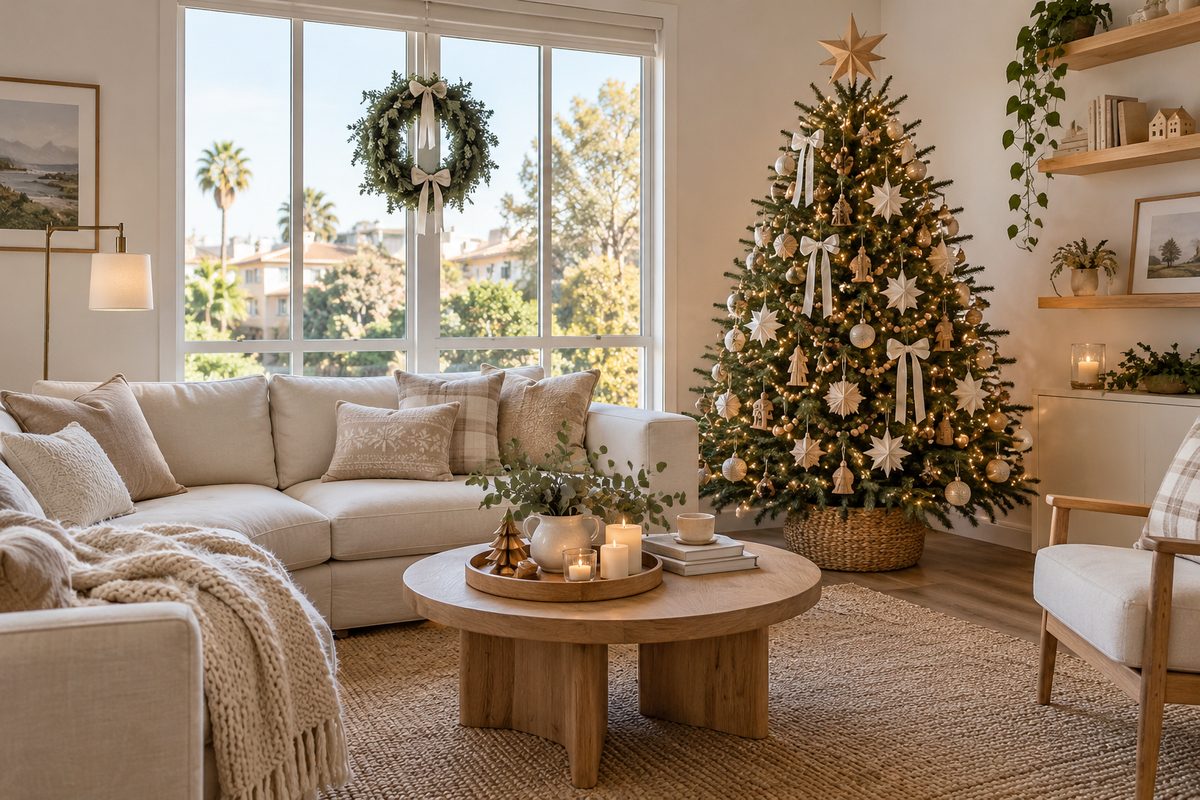
A Christmas decorating style works best when it feels connected to the home around it. Your furniture, wall colors, natural light, and favorite family decorations are useful starting points for choosing a holiday look.
You might love a traditional red-and-green Christmas, a light Scandinavian scheme, or a tree filled with colorful handmade ornaments. The aim is to make those choices feel intentional in your own space.
This guide compares seven popular Christmas decor styles and shows you how to choose a palette, coordinate different rooms, and preview an idea with My Festive Home before deciding what to buy.
Start with the room you already have
Look at your space before collecting more inspiration photos. Notice three things: its permanent colors, its main materials, and how it is used.
A living room with oak floors, a brown leather sofa, and a brick fireplace already has warm, textured elements. A rustic woodland scheme could work with those features. A cream apartment with pale furniture might provide an easy starting point for white paper stars, natural greenery, and simple wooden ornaments.
These are starting points, not fixed rules. Traditional decorations can suit a modern home, and a colorful tree can work in a quiet interior. The connection often comes from repeating a few colors or materials.
Also consider practical details. A narrow entryway needs a different arrangement from a spacious foyer. A living room used for children's play needs clear floor space. Choose decorations that fit how you live throughout December.
Compare seven Christmas decorating styles
| Style | Typical palette | Distinctive details | A useful starting point |
|---|---|---|---|
| Traditional | Red, evergreen green, gold | Familiar ornaments, wreaths, ribbon, warm lights | Existing red or gold decorations |
| Scandinavian | White, beige, pale wood, greenery | Paper stars, natural textures, simple shapes | A light, restrained arrangement |
| Rustic woodland | Brown, green, cream, muted red | Pinecones, wood, textured fabric, organic greenery | Timber, brick, and earthy furnishings |
| Elegant gold | Champagne, ivory, gold | Coordinated ribbon and varied metallic finishes | One refined focal area |
| Winter wonderland | White, silver, icy blue | Snowflake motifs and frosted decorative branches | A cool seasonal palette |
| Colorful and playful | Bright repeated colors | Handmade details, cheerful shapes, mixed ornaments | A family collection with personality |
| Home Alone-inspired | Deep red, green, warm gold | Plaid, vintage-looking ornaments, layered warmth | Nostalgic American Christmas atmosphere |
Traditional Christmas: familiar and welcoming
Traditional Christmas decorating combines recognizable colors and objects. Think evergreen wreaths, red bows, gold baubles, stockings, and warm white lights.
To make this style your own, choose the version of red that suits the room. Burgundy can connect with dark wood and patterned textiles, while brighter red can bring a cheerful accent to a neutral space.
Start with your tree or front door. Repeat the ribbon color in one or two nearby arrangements to connect the design.
Scandinavian Christmas: natural and airy
A Scandinavian-inspired Christmas look uses light colors, greenery, simple forms, and tactile materials. Paper stars and wooden ornaments provide detail without needing a large number of objects.
Give the design a clear seasonal focal point. A plain room with a single small branch may feel unfinished if your goal is an obvious Christmas makeover. A decorated tree, a substantial wreath, or a well-composed window display can provide that focus.
Use a few repeated materials so the simplicity feels deliberate.
Rustic woodland Christmas: texture and warmth
Rustic Christmas decor works with natural-looking shapes and materials. Pinecones, woven fabric, wooden ornaments, and loosely arranged greenery create an organic character.
You can use the look in an apartment as easily as a cabin. A wooden tray, textured throw, and a few woodland ornaments may be enough to introduce it.
Keep the arrangement proportionate. Large branches and heavy garlands need enough space and suitable support.
Elegant gold Christmas: coordinated and polished
An elegant gold scheme is about coordination, scale, and texture. Champagne ribbon, ivory ornaments, and a mixture of matte and reflective finishes can create depth within a limited palette.
Choose one focal area to develop first: the tree, dining table, or entryway console. Work with the metallic finishes already in the room where possible.
This style can use affordable decorations. The visual effect depends on how the pieces work together, rather than an assumed price level.
Winter wonderland: a cool seasonal palette
White, silver, and icy-blue decorations can give a room a winter wonderland atmosphere. Snowflake ornaments, frosted-looking decorative branches, and pale textiles make the theme recognizable.
Keep the style separate from the weather. A silver-and-white Christmas tree can belong in a Florida living room without adding artificial snow to the floor or changing the outdoor landscape.
Balance cool colors with the room's existing light so the result still feels comfortable.
Colorful Christmas: playful and personal
A colorful Christmas scheme is a good way to display handmade ornaments, family keepsakes, and a mix of favorite decorations.
Choose a repeated element to connect the collection. That could be red ribbon, the same style of ornament hooks, or a consistent set of lights.
Leave enough room around individual pieces to see them. A playful design can have plenty of personality while still looking organized.
Home Alone-inspired Christmas: nostalgic and layered
A Home Alone-inspired look draws on the atmosphere of a traditional American family Christmas: deep reds and greens, plaid textiles, vintage-looking ornaments, and inviting light.
Adapt the effect to the room you have. A plaid throw, a decorated tree, and one generous greenery arrangement can introduce the feeling in a modest living room.
For a more detailed guide, explore our Home Alone-inspired Christmas decorating ideas.
Build a palette around your existing decorations
Choose a main color, a supporting color, and an accent. For example, evergreen green could provide the base, burgundy the supporting color, and gold the finishing detail.
Lay out the decorations you already own and see which fit that combination. Keep sentimental ornaments even when they introduce another color; you can repeat a similar tone elsewhere to help them belong.
Try the palette in one small arrangement before applying it to the whole room. A tray with a few ornaments, ribbon, and greenery gives you a practical way to judge the combination in your actual light.
Mix styles through shared details
You can combine Christmas decorating styles without giving each area an entirely different look.
Traditional and rustic decor might share green foliage, red accents, and natural textures. Scandinavian and elegant decor could share ivory, pale wood, and restrained metallic details.
Choose one style to lead, then borrow a small number of elements from another. This makes buying and arranging decorations easier.
If your favorite look includes pieces from several styles, use the color palette as the connecting thread. You do not need a perfect category label to create a cohesive home.
Preview the style in your own home with My Festive Home
Inspiration photos show what works in someone else's setting. A visual concept based on your own room helps you explore how a style could relate to your furniture, proportions, and existing colors.
My Festive Home creates a festive decoration concept from a photo of your space. Use the resulting image to consider the overall atmosphere, the focal areas you like, and the amount of decoration you want.
Review practical details separately. The picture is an AI illustration, not a measured installation plan, so check sizes on site. Every decoration in it is a real product from a US store, and next to your design you get the list of products with their prices and a link to buy each one.
Explore your Christmas decorating style with My Festive Home.
Carry the look through your home
Coordinate the rooms people see together first. A front entrance, entry hall, and living room can feel connected through repeated ribbon, greenery, or ornament colors.
Use smaller echoes in the kitchen and bedroom. A tea towel in the chosen color, a compact arrangement, or a seasonal throw can connect these spaces to the main design.
Match the decoration density to the room. A dining table needs room for place settings, while an entry console should retain space for everyday essentials.
For help deciding where to focus your purchases, see our guide to Christmas decorating on a budget.
A quick worksheet for choosing your Christmas style
Complete these sentences before shopping:
- My home's main colors and materials are…
- The Christmas decorations I most want to use are…
- The atmosphere I want is…
- My main seasonal colors will be…
- The first area I will decorate is…
- The amount I want to spend on additions is…
Your answers are a useful brief for creating a design and reviewing potential purchases.
Frequently asked questions
How do I choose a Christmas decorating theme?
Start with your existing interior and favorite decorations. Choose the atmosphere you want, then select a limited palette and one main focal area. Test the combination in your room before buying items for the whole house.
Can I mix different Christmas decor styles?
Yes. Shared colors, materials, or ribbon can connect different styles. Choose a leading look and introduce selected details from another so the overall arrangement remains easy to follow.
Does every room need the same Christmas colors?
Rooms can have their own emphasis. Repeating a few details in adjoining areas can help the home feel connected, while bedrooms and smaller spaces can use quieter versions of the main palette.
Can My Festive Home help me choose a Christmas style?
A My Festive Home concept gives you a visual reference based on a photo of your home. Use it to explore the look you like. The design comes with a list of the real products in it, with prices and links to US stores, so check your measurements and the product pages to turn it into a shopping plan.
Choose a look that feels at home
Start with the colors, furniture, and traditions you already enjoy. Build one coordinated focal area, then extend the details where they fit naturally.
Create a Christmas concept for your home with My Festive Home.