
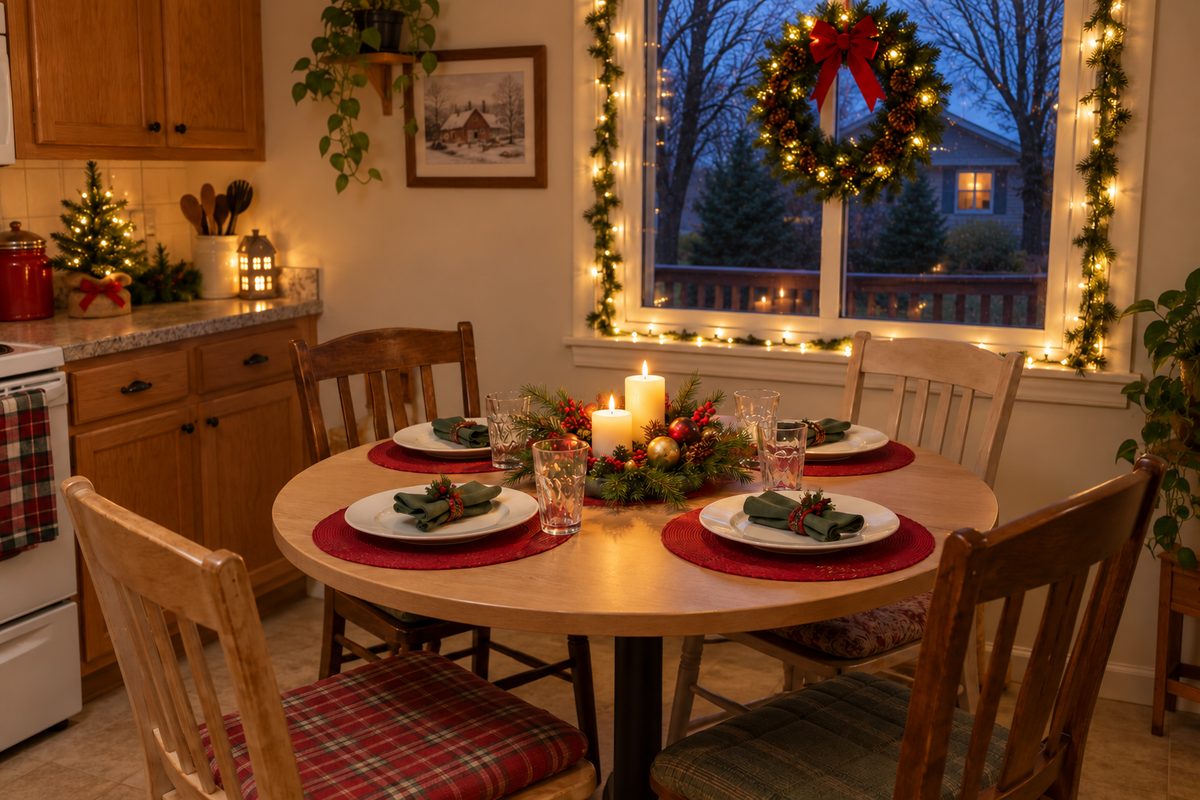
Christmas decorating on a budget starts with choosing where you want the seasonal change to be most noticeable. A coordinated tree, welcoming front door, or festive dining table can give your home a strong Christmas atmosphere without requiring new decorations in every room.
Before shopping, look at what you already own. Then decide which additions would improve the design you want to create.
This guide covers affordable Christmas decorating ideas, a room-by-room priority plan, and ways to use a My Festive Home visual concept as a reference for your purchases.
Set a decorating budget around your actual plans
Choose an amount you are comfortable spending on new decorations. Keep it separate from gifts, food, and entertaining so you can see how much is available for your home.
Include the supporting items as well as the visible ones: suitable hooks, mounting accessories, batteries, delivery charges, and storage may all affect the total.
If you are buying for several areas, rank them. The living room might come first because you use it every evening. A front-door wreath might be your next priority, with extra bedroom decorations left for another year.
A clear order helps you decide where the next purchase belongs.
Reuse your Christmas decorations before adding more
Unpack your decorations and group them by purpose: tree ornaments, greenery, lighting, ribbon, textiles, and table accessories.
Check what still fits your home and which pieces you want to keep using. Photograph the groups so you can refer to them when shopping.
Then look for ways to recombine them:
- Use matching baubles in a bowl or tray when you have more than the tree needs.
- Change the ribbon on an existing wreath to connect it with a new palette.
- Move a small arrangement from a low-visibility room to the entryway.
- Use a favorite scarf or fabric piece as a decorative accent where it suits the setting.
- Group several small ornaments together so they read as one intentional display.
Keep sentimental decorations in the plan. Their value may come from family history rather than how closely they match an inspiration image.
Inspect old lights before using them, and replace damaged sets rather than treating electrical repairs as a decorating shortcut. The U.S. Consumer Product Safety Commission's holiday guidance recommends discarding light sets with damaged sockets, wiring, or connections.
Choose a small number of focal areas
A useful budget question is: “Where will I see and enjoy this decoration most?”
For many homes, the answer is one or two of these places:
| Focal area | Start with what you own | Possible addition to consider |
|---|---|---|
| Christmas tree | Existing ornaments and topper | Coordinating ribbon or a missing light set |
| Front entrance | An existing wreath or planter | A fresh bow or one proportionate arrangement |
| Fireplace mantel | Stockings and everyday candleholders | A garland suited to the mantel |
| Dining table | Plates, glasses, and a plain runner | A low reusable centerpiece |
| Living-room seating | Existing throws and cushions | One seasonal cover in the chosen palette |
These are planning options, not a list of required purchases. If the arrangement already feels complete, you can keep the budget for another priority.
Where new spending can make sense
Replace a missing essential
Start with the item that allows the rest of the design to work. That could be a suitable tree stand, a properly sized wreath hanger, or lighting rated for its intended location.
The best priority depends on your actual setup. A decorative extra has less value if the main arrangement cannot be used as planned.
Add one piece that connects the collection
A roll of coordinating ribbon or a set of simple ornament hooks can help older decorations look more consistent. The important point is the role the addition plays.
Try the proposed color beside your existing ornaments before committing to a large quantity.
Choose a proportionate main decoration
If your collection lacks a focal piece, concentrate on one that fits the space: a wreath that suits the front door, a tree that leaves room to move, or a centerpiece that works with your table.
Measure first. A decorative item that fits well is more useful than a larger one chosen only because it looks impressive in a product photograph.
Where to simplify the plan
Extra color themes
Adding a completely new palette can create several new shopping requirements at once. Work with a color already present in your decorations when that suits your taste.
If you want a change, introduce it in one area first. See how it looks before extending it across the house.
Decorations for every surface
Choose a few visible displays and leave practical areas available for daily use. You may need fewer pieces than a room-by-room shopping list initially suggests.
A clear kitchen counter and usable coffee table also make the finished home easier to enjoy.
Single-use finishing details
Consider whether you will use an item again and where you will keep it. Reusable ribbon, adaptable ornaments, and flexible arrangements may offer more decorating options over time.
Compare the actual materials and dimensions rather than relying on broad labels such as “luxury” or “premium.”
Affordable Christmas decorating ideas by room
Living room: connect the tree and seating
Begin with the Christmas tree if you already have one. Repeat one ornament or ribbon color in a nearby throw, cushion, or small table arrangement.
Use existing furniture and accessories. A tray can group several decorations, and a familiar blanket can bring seasonal color into the seating area.
Dining area: style what you already set on the table
Start with your existing plates, glasses, and table linen. Add a low centerpiece and repeat its color in the napkins or ribbon.
Check how much room remains for serving dishes. A compact arrangement is often a more practical choice than several separate decorations.
Front entrance: focus on one clear gesture
An existing wreath with a different bow can be the entire plan for a small entrance. If you have planters, consider how they can contribute before buying additional containers.
Keep door access and the walking route clear.
Bedroom: change the textiles first
Use a seasonal throw, a cushion cover, or a small bedside arrangement to connect the bedroom with the rest of the home.
Choose a palette that works with the bedding you own. A full new bedding set is only one possible way to create the effect.
Small apartment: use existing surfaces
A windowsill, shelf, or entry console can become a Christmas focal area. Choose decorations that fit the usable surface and can be stored afterward.
For more ideas, explore our 15 space-saving Christmas decorating ideas for small apartments.
Preview your Christmas plan with My Festive Home
A visual plan can help you identify the role of each decoration before shopping.
My Festive Home creates a Christmas decoration concept from a photo of your home. Review the image alongside your existing collection. Decide which elements you already have, which you could adapt, and which additions matter most to the look you want.
You can then simplify the concept around your budget. Keep the main focal area and reduce secondary details where needed.
Every decoration in the picture is a real product from a US store, listed next to your design with its price and a link, so you can see what each piece costs and leave out what you already own. The picture is an AI illustration and prices can change, so measure your space and check the store page before ordering.
Preview a festive look for your home with My Festive Home.
Make a “use, adapt, buy” list
Sort the plan into three columns:
| Use | Adapt | Buy only if needed |
|---|---|---|
| Decorations that already suit the design | Existing pieces that need a new position, ribbon, or grouping | Missing items with a specific purpose |
| Favorite family ornaments | A wreath with a different bow | A suitably sized hanger |
| Everyday trays and candleholders | A revised table arrangement | A product needed to complete the main display |
| Existing seasonal textiles | Colors repeated in a different room | An optional accent within the remaining budget |
This makes the shopping list more specific. You can also assign a spending ceiling to each new purchase before comparing options.
Review the plan before checkout
Check that the items in your cart serve the priorities you chose. Compare sizes with your measurements and remove duplicate purchases unless you need them for a defined arrangement.
Read current delivery estimates and return conditions. Include any necessary accessories in the final total.
If the design feels complete with fewer items, keep the simpler version. You can add decorations in future years as your collection develops.
Frequently asked questions
How can I make my home look festive on a small budget?
Choose one or two focal areas, reuse your existing decorations, and repeat a small color palette. A coordinated tree, wreath, or tabletop arrangement can establish a clear Christmas atmosphere.
What should I buy first for Christmas decorating?
Start with missing essentials and the main decoration for your highest-priority area. Measure the space and check what you already own before buying secondary accents.
How do I refresh old Christmas decorations?
Try a different ribbon, a revised ornament grouping, or a new location. Repeating a few colors across existing pieces can make the collection feel more cohesive.
Will a My Festive Home design show me what the decorations cost?
Yes, item by item. Each decoration in the design is a real product from a US store, listed with its price and a link to buy it. Prices and stock can change and the picture is an AI illustration, so check dimensions, quantities, and the current price on the store page before ordering.
Build a Christmas home you can keep enjoying
A useful budget plan makes room for your favorite decorations and gives every new purchase a clear purpose. Start with the collection you own, focus on the areas you use, and add only what helps complete the look.
Explore your Christmas decorating concept with My Festive Home.